TechTown
Apple's Biggest Price Hike in Years: Macs, iPads, and Home Devices Cost More
Apple has raised prices for Macs, iPads, HomePods, and more due to rising memory costs. Here's everything that's more expensive and what it means for future Apple products.
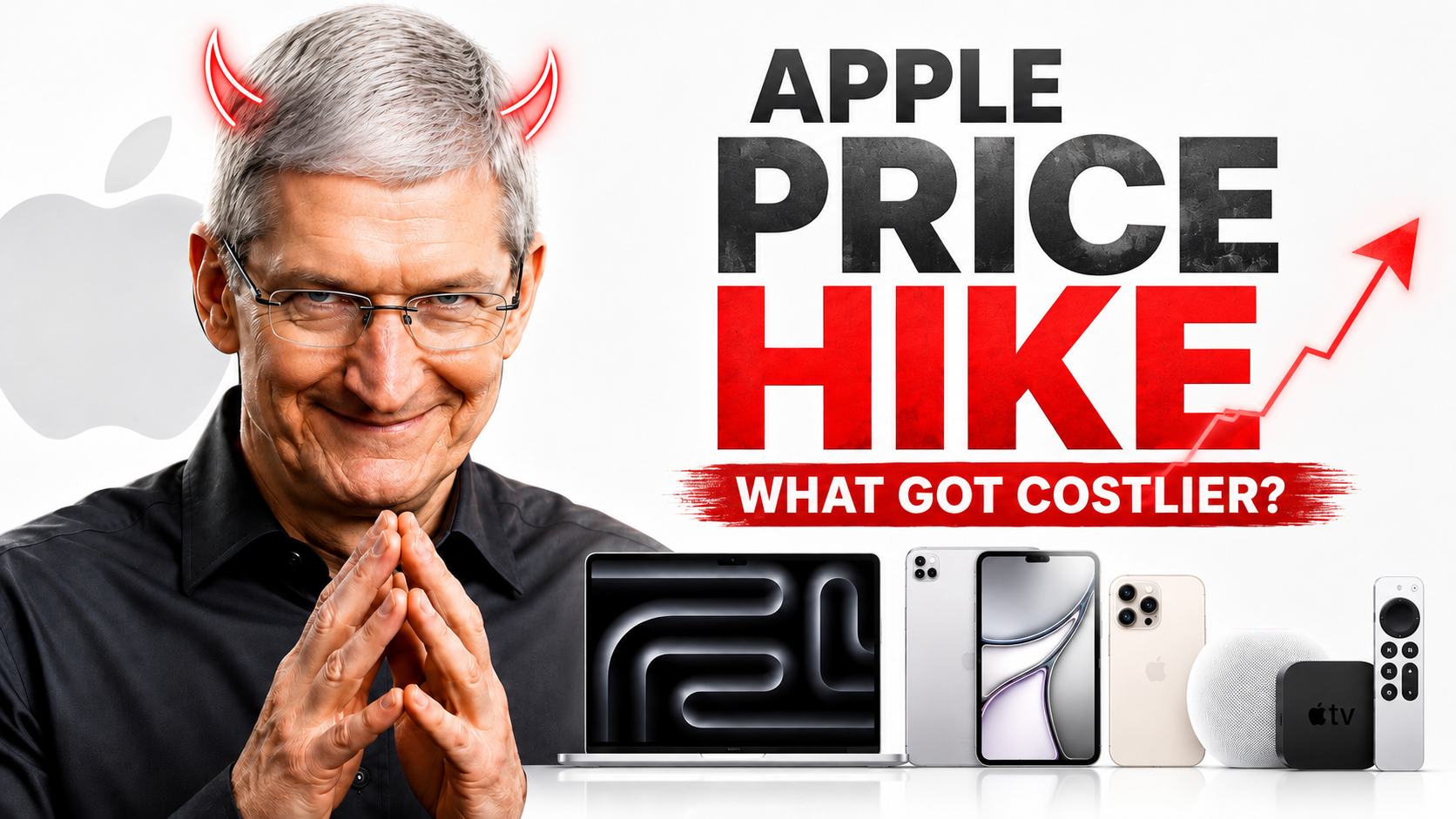
Apple Raises Prices Across Its Product Lineup: Macs, iPads, and Home Devices Get Significantly More Expensive
The price increase that many Apple customers feared has finally arrived. Apple has officially raised the prices of a large portion of its product portfolio, and the revised pricing has already gone into effect across multiple markets.
According to the company, the primary reason behind this move is the continued rise in memory and storage component costs. While fluctuations in component pricing have affected the technology industry for years, Apple has traditionally shielded customers from these increases by leveraging its enormous supply chain and long-term supplier agreements. This time, however, the company has decided that absorbing those higher costs is no longer sustainable.
The result is one of Apple's most significant pricing updates in recent history, affecting everything from smart home products to premium Macs.
The Good News: iPhones Remain Unchanged
Before diving into the products that have become more expensive, there is one major positive.
Apple's iPhone lineup has been left untouched for now.
Whether you're planning to purchase an iPhone 17, iPhone 17 Pro, or any currently available iPhone model, pricing remains exactly the same. Apple has also kept prices unchanged for the entire AirPods family, the Apple Pencil lineup, and the Studio Display.
For customers who were already planning to buy these products, there is no immediate need to worry about paying extra.
Unfortunately, that stability doesn't extend to the rest of Apple's ecosystem.
Smart Home Products Become More Expensive
Apple's home-focused devices are among the first categories to receive noticeable price increases.
The HomePod mini now costs roughly $30 more than before, while the larger HomePod has jumped by around $50. Even the Apple TV streaming device hasn't escaped the revision, with prices increasing by approximately $70 depending on the region.
Although these products aren't Apple's highest-volume sellers, anyone looking to build or expand an Apple-powered smart home will now face considerably higher costs.
iPad Prices Climb Higher
Apple's iPad lineup has also become significantly more expensive.
The 11-inch iPad Air now carries an increase of roughly $150, while the 11-inch iPad Pro has risen by approximately $200.
These tablets were already positioned as premium devices aimed at students, creative professionals, and business users. With the latest price adjustment, they now represent an even larger investment, making purchasing decisions more difficult for many buyers.
Macs Receive the Biggest Price Increases
The most dramatic changes can be seen across Apple's Mac lineup.
The entry-level MacBook Neo with 256GB of storage now starts at around $699, representing an increase of approximately $100. The MacBook Air has become about $200 more expensive, while the 14-inch MacBook Pro now costs roughly $300 more than it did previously.
For many customers, these increases alone are substantial.
However, Apple's professional desktop lineup has experienced an even more dramatic jump.
Mac Studio Sees a Massive Price Jump
Among all Apple products, the Mac Studio has received the largest price increase.
The version powered by the M4 Max chip now costs around $500 more than before. Even more striking is the high-end M3 Ultra configuration equipped with 96GB of unified memory and 1TB of storage, which has become approximately $1,300 more expensive overnight.
This represents one of the largest single-generation price increases Apple has ever introduced for a Mac. A workstation that was already considered premium has now moved even further into the ultra-high-end category, making it a much tougher purchase to justify for professionals and creators alike.
Upgrades Now Cost More Too
The higher pricing isn't limited to base models.
Apple has also increased the cost of memory and storage upgrades across its online store. Customers who configure their Macs with additional unified memory or larger SSD capacities will now pay noticeably more than they would have previously.
This means that fully customised systems could end up costing hundreds or even thousands of dollars more than comparable configurations before the price revision.
What This Could Mean for Future Apple Products
The latest pricing strategy could have broader implications beyond today's products.
If memory and storage costs continue to rise, Apple may choose to maintain this approach for future launches. That could result in upcoming Macs, iPads, and potentially even future iPhones debuting at higher starting prices than consumers have become accustomed to.
While Apple has not confirmed any plans regarding future products, today's announcement certainly raises questions about how the company's pricing strategy may evolve over the next several years.
Indian Customers Face an Even Bigger Impact
The price increase is global, but buyers in India are experiencing an even greater effect.
In addition to higher product prices, Apple has revised the currency conversion used for the Indian market. As a result, Macs and iPads now cost significantly more compared to their U.S. pricing, while memory and storage upgrades have also become more expensive.
This revised pricing structure may also influence the launch prices of future Apple products in India, potentially widening the gap between Indian and international pricing.
Final Thoughts
Apple has officially entered a new pricing era.
Although the iPhone lineup has escaped this round of increases, nearly every other major product category including Macs, iPads, HomePods, and Apple TV has become more expensive. The cost of upgrading memory and storage has also risen, making premium configurations considerably pricier than before.
Whether these increases prove to be temporary or become Apple's long-term pricing strategy remains to be seen. What is certain, however, is that this marks one of the most significant price revisions Apple has introduced in years, and it could shape the cost of future Apple devices for a long time to come.