TechTown
iPhone Fold: Everything We Know About Apple’s First Foldable iPhone
Apple’s first foldable iPhone could arrive in 2026 with a 7.8-inch display, ultra-thin design, powerful hardware, Touch ID, massive battery, and a premium $2,000+ price tag.
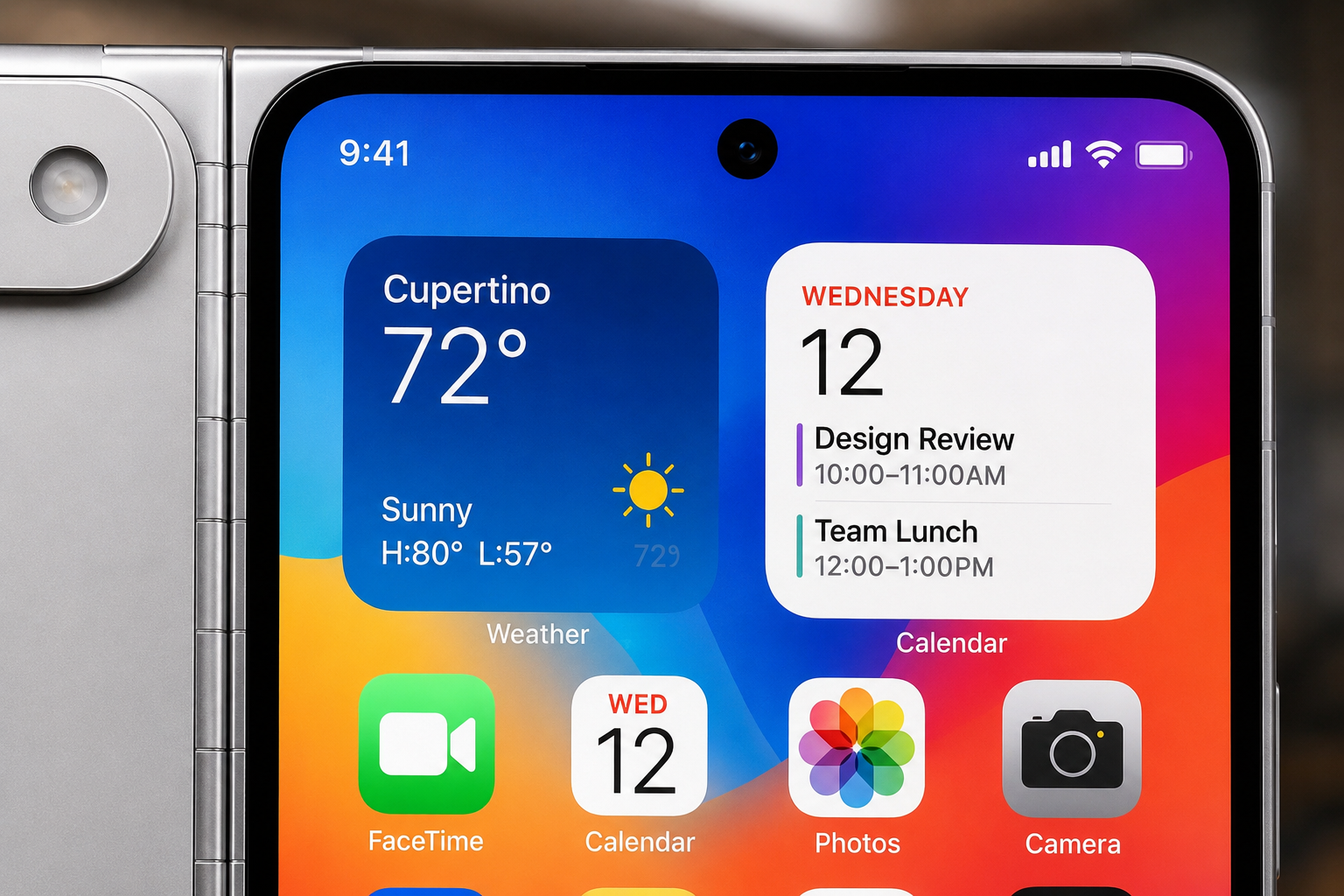
Apple’s long-awaited entry into the foldable smartphone market could finally be here
Apple has spent years watching other smartphone makers experiment with foldable devices, but that wait may finally be coming to an end. After more than a decade of rumors and development, Apple is reportedly preparing to launch its first foldable iPhone in 2026.
And if the current leaks are accurate, Apple isn't simply planning to make another foldable phone. The company appears to be designing a completely new kind of iPhone that combines the portability of a smartphone with the larger screen experience of an iPad.
The device is expected to arrive as part of Apple's fall 2026 iPhone lineup, potentially alongside the iPhone 18 Pro and iPhone 18 Pro Max. There is still uncertainty around the exact launch date, however, as some reports point to a simultaneous release while others suggest the foldable could arrive slightly later because of manufacturing challenges.
Apple's final name for the device also remains unknown. One of the strongest rumors is that the company could brand it as the iPhone Ultra.
A foldable iPhone with a completely different design
Apple is reportedly taking a different approach from most existing foldable smartphones. Instead of using a tall and narrow design, the first foldable iPhone is expected to feature a book-style form factor with a wider body.
When folded, the device could have a display measuring roughly 5.5 inches. Open it up, and users could get a much larger 7.8-inch OLED display with a 4:3 aspect ratio.
That would put the unfolded device somewhere between a conventional iPhone and an iPad mini in terms of usability.
The design is also expected to be exceptionally thin. Rumors suggest the iPhone could measure as little as 4.5mm when unfolded, potentially making it Apple's thinnest iPhone ever.
Achieving that level of thinness won't be easy. Apple is reportedly using a titanium-based construction for added durability, while carefully engineering the internal components to make the most of the limited space.
Apple’s biggest focus could be eliminating the crease
One of the biggest complaints about modern foldable phones is the visible crease running through the center of the display. Apple reportedly wants to avoid that problem almost entirely.
The company is said to be working with ultra-thin glass, advanced display materials, specialized optical adhesives and a redesigned hinge mechanism to make the fold as smooth and subtle as possible.
Some leaks claim the crease could be nearly invisible when the device is unfolded.
Apple has reportedly spent years working toward this goal, which could explain why the company has taken so long to enter the foldable market. Rather than releasing a foldable simply to compete with existing devices, Apple appears to be waiting until the technology meets its standards.
A thinner design could mean fewer cameras
The slim profile could also force Apple to make some compromises.
Unlike the Pro iPhone models, the foldable iPhone is expected to feature 2 rear cameras rather than 3. The setup could consist of a main camera and an ultra-wide camera, with the dedicated telephoto lens reportedly being left out because of space limitations.
The device may also abandon Face ID.
Because the TrueDepth camera system requires additional internal space, Apple could reportedly return to Touch ID, with the fingerprint sensor integrated into the power button.
For longtime iPhone users, that would represent a major change.
A powerful new generation of hardware
Despite its thin design, Apple is reportedly planning powerful hardware for the foldable iPhone.
The device is expected to feature the A20 chip, potentially manufactured using TSMC's 2nm process. The new chip could deliver improvements in both performance and efficiency compared with the previous generation.
Apple is also rumored to pair the processor with up to 12GB of RAM and vapor-chamber cooling to help manage heat inside the extremely thin chassis.
Connectivity could receive a major upgrade as well, with the device reportedly using Apple's second-generation C2 modem. This could bring improved 5G performance, mmWave support and expanded satellite connectivity.
One of the biggest iPhone batteries ever
Battery life is another area where Apple's engineering decisions could become particularly interesting.
Despite the foldable design and thin body, Apple is reportedly working on high-density battery technology that could allow the device to pack a battery between 5,400mAh and 5,800mAh.
If those figures are accurate, it would give the foldable iPhone the largest battery capacity ever seen in an iPhone.
Apple is also reportedly making improvements to the efficiency of the foldable display itself, helping reduce power consumption and maximize battery life.
The iPhone Fold could be extremely expensive
There is, however, one major downside that potential buyers will need to consider: the price.
Current rumors suggest Apple's first foldable iPhone could start somewhere around $2,000, with some estimates reaching $2,500 or even higher.
That would make it significantly more expensive than Apple's traditional flagship iPhones and potentially the most expensive iPhone ever released.
The high price would likely reflect the cost of the advanced display, hinge, materials and engineering required to create such a thin foldable device.
iOS could be redesigned around the larger display
The hardware isn't the only part of the foldable iPhone that could be different.
Apple is reportedly preparing iOS to work with a wider variety of screen sizes and aspect ratios. Recent software references have reportedly pointed toward support for foldable-specific features, including display states and changing hinge angles.
Apps could also become more flexible, allowing them to adapt to the larger unfolded screen rather than simply stretching the standard iPhone interface.
When opened, the foldable iPhone could therefore offer an experience that feels much closer to an iPad, with layouts specifically designed to take advantage of the additional screen real estate.
Apple could finally have its answer to the foldable market
The iPhone Fold represents something Apple has been avoiding for years: entering a smartphone category after competitors have already had several generations to refine it.
But that could also be Apple's biggest advantage.
Instead of rushing a foldable iPhone to market, Apple appears to have spent years addressing the problems that have held the technology back — particularly thickness, durability, battery life and the display crease.
If the latest rumors prove accurate, Apple's first foldable could combine an ultra-thin design, a nearly crease-free display, powerful hardware and iPad-like functionality in a device that still fits into your pocket.
The price may be intimidating, and compromises such as the lack of Face ID and a telephoto camera could disappoint some users. But if Apple can deliver the polished foldable experience it appears to be targeting, the iPhone Fold could become much more than another addition to the iPhone lineup.
It could mark the beginning of a completely new chapter for Apple's most important product.